Nasir Al-Din Al-Tusi Biography - Childhood, Life Achievements & Timeline
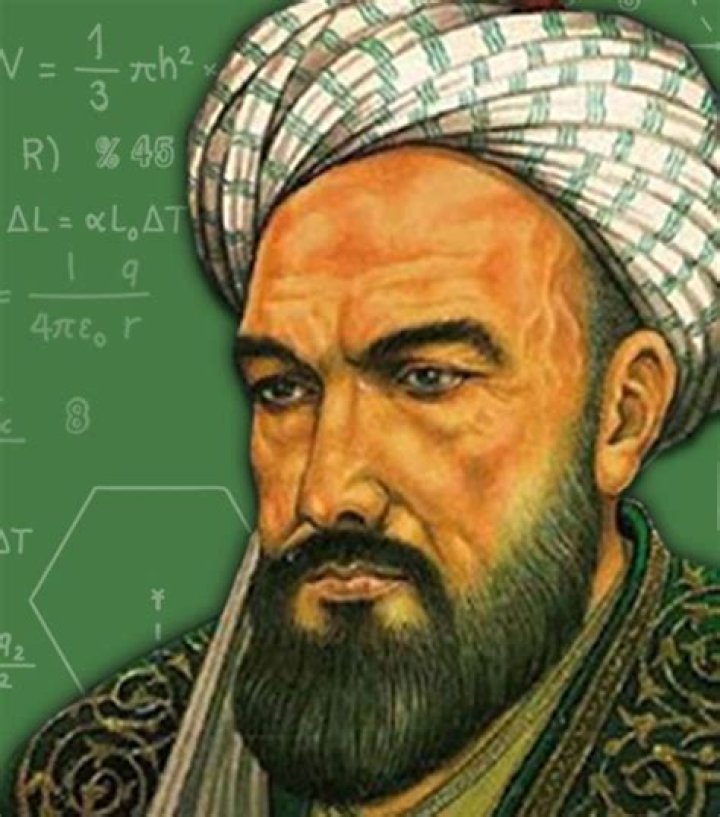
Nasir al-Din al-Tusi Biography
(Writer)Birthday: February 18, 1201 (Aquarius)
Born In: Tous, Iran
Advanced SearchNasir al-Din al-Tusi was a prolific author and an eminent scholar in the Islamic medieval period who wrote in different fields of philosophy and science. He was a multi-talented personality who made several accomplishments in a wide range of learning areas, including mathematics, philosophy, astronomy, architecture, theology, Islamic medicine, occult sciences, music, logic, physiology, literature and geography. He made major findings in the fields of astronomy and trigonometry, years before anyone even thought of them. He was instrumental in establishing one of the largest astronomical observatories in the Islamic world, situated in Maragha, modern-day Azerbaijan. He is known for introducing astronomical tables for planetary movements, which were used by astrologers in the coming years. He started writing as a student and went on to become a talented and learned intellectual. His journey of discovering and researching on a variety of subjects began when he was captured and hired as a scientific advisor by Mongol leader Hulagu Khan. He is credited for authoring over 150 books in Arabic and Persian in Islamic subjects as well as in secular areas. He translated the works of some of the most distinguished mathematicians and astrologers in Arabic
Quick FactsNick Name: Nasīr al-Dīn Tūsī, Tusi
Also Known As: Muhammad ibn Muhammad ibn al-Hasan al-Tūsī, Nasīr al-Dīn Tūsī, Tusi
Died At Age: 73
Family:father: Mohammad ibn Hassan
Born Country: Iran (islamic Republic Of)
Died on: June 26, 1274
place of death: Al Yassin Mosque, Baghdad, Iraq
discoveries/inventions: Tusi Couple
Recommended For You
Recommended Lists:
Iranian PeopleMathematiciansIranian MenMale ScientistsMale Architects Childhood & Early LifeKhwaja Muhammad ibn Muhammad ibn al-Hasan al-Tusi, or Nasir al-Din al-Tusi for short, was born on February 18, 1201, in Tus, medieval Kharasan (now north-eastern Iran), into a wealthy and learned Twelver Shi’ah family.After losing his father as a child, he devoted his entire life in accomplishing his father’s dream of becoming a learned scholar.His education started in Tus where he was taught physics, logic and metaphysics by his uncle, while he learnt mathematics under other teachers.He moved to Nishapur, a prominent learning center, as a teenager to study more advanced topics in mathematics, philosophy and medicine. Thereafter, he went to Mosul to take mathematics and astronomy lectures.Continue Reading BelowRecommended Lists:Male PhilosophersAquarius ScientistsIranian ScientistsIranian AstronomersCareerWhile studying at Mosul, he completed a small booklet of philosophical Sufi compositions ‘Awsaf al-Ashraf’ (The Attributes of the Illustrious).After completing his education in the early 1230s, he took refuge from the Mongols, who had invaded Tus, at the Isma’ili fort, where he spent the next 25 years researching on philosophy, astronomy, logic and mathematics.In 1247, he authored ‘Tahrir al-Majisti’ (Commentary on the Almagest) as an introduction to trigonometry and showed various methods to calculate sine tables.While he was at the Isma’ili capital, Alamut, in 1256, the Mongols, led by Hulagu Khan, invaded and captured him. However, he was appointed Hulagu’s scientific advisor due to his knowledge, talent and abilities.In 1259, he began the construction of Rasad Khaneh Observatory in Maragha, after seeking Hulagu’s consent and served as its director till his death. It was equipped with the best instruments and included a library and school as well.His four-volume ‘Zij-i ilkhani’ (Ilkhanic Tables), completed in 1272, is one of his major astronomical works, which presents the research made at the observatory.Among over 150 works he produced during his lifetime, he also translated the works of some eminent astrologers and mathematicians into Arabic - some being Archimedes, Autolycus, Ptolemy, Hypsicles, Theodosius, and Menelaus.Some of his major works include ‘Akhlaq-i-Nasri’ (The Nasirean Ethics), ‘Al-Tadhkirah fi’ilm al-hay’ah’ (Memoir on Astronomy), ‘Tasawwurat’ (Notions), ‘Asas al-iqtibas’ (Foundations of Inference), and ‘Mi’yar al-ash’ar’ (Treatise on Poetics).Recommended Lists:Iranian PhilosophersIranian MathematiciansIranian Intellectuals & AcademicsAquarius MenMajor WorksHe pioneered in building an astronomical observatory in Maragha, where he spent 12 years in producing an accurate table for planetary movements, which were used by astrologers till the 1600s.Continue Reading Below He is credited with inventing the Tusi-couple, a geometrical technique for solving the problematic equant of Ptolemy. His invention was later used by famous astrologers – Ibn al-Shatir and Nicolaus Copernicus.His ‘Treatise of the Quadrilateral’ is regarded as his best work on mathematics, where he differentiates between spherical trigonometry and astronomy, thus declaring trigonometry a branch of mathematics, distinct from astronomy.He was the first astronomer to describe the Milky Way’s composition of numerous small and tightly-clustered stars, which was proved by Galileo Galilei three centuries later in 1610, using a telescope.Personal Life & LegacyHe married a Mongol in 1256, after being accepted by Hulagu Khan.In 1274, he went to Baghdad with a group of his students, where he died on June 26, at the age of 73.A lunar crater, measuring 60-km in diameter, on the southern hemisphere of moon has been named as ‘Nasireddin’.The Observatory of Shamakhy, in Republic of Azerbaijan, and K.M. Toosi University of Technology, in Iran, are named after this medieval Persian scholar.Soviet astronomer Nikolai Stepanovich Chernykh discovered a minor planet in 1979 and named it ‘10269 Tusi’ in his honor.In 2009, an honorary stamp was issued by the republic of Azerbaijan, dedicated to al-Tusi. Google created a doodle as part of his 812th birthday celebrations in February 2013, which included the term ‘al-farsi’ (the Persian) called out in Arabic language.TriviaHe earned the distinguished titles of ‘ustadh al-bashar’ (teacher of mankind), ‘khwaja’ (famous scholar), and ‘al-mu’allim al-thalith’ (third teacher, after Aristotle and Al-Farabi) for his exceptional works in a variety of subjects.